Industry Night: Three Chefs. One Ancient Process. Real Tortillas.
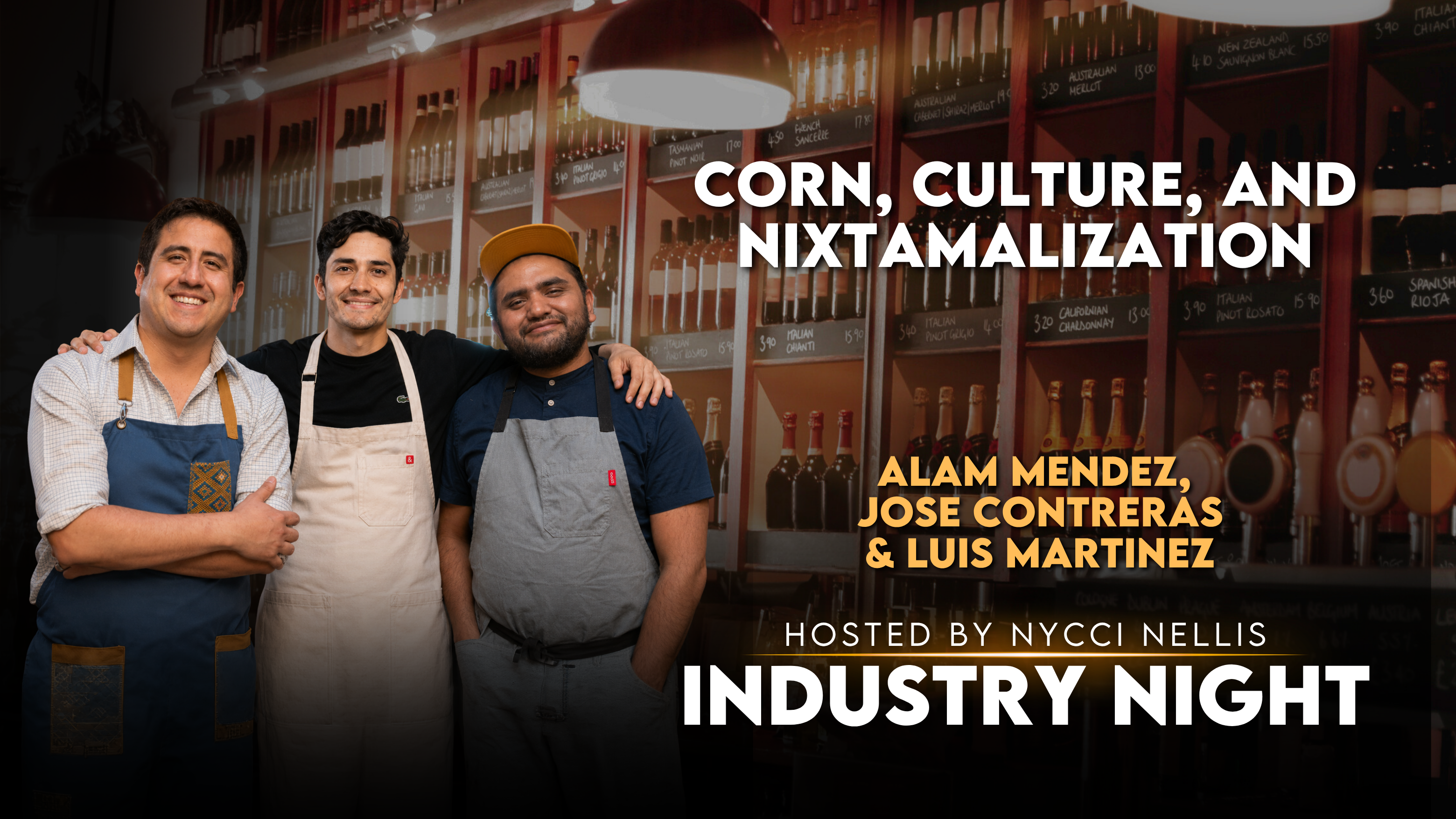
Alam Mendez, Jose Contreras, and Luis Martinez are on the DC food podcast Industry Night talking about nixtamalization, the 3,500-year-old process that sustained entire civilizations and that most people eating corn tortillas today have never heard of. That gap between the food on your plate and the knowledge behind it is exactly what this conversation is about.
Nycci Nellis sits down with three chefs who are each fighting the same battle from different corners. Alam Mendez grinds corn in house daily at Apapacho Taqueria in Washington DC, keeping Oaxacan tradition alive in the middle of the DC dining scene. Jose Contreras is a 2025 James Beard semifinalist and owner of Amelia's in Tucson, and he is about to open Carizal, a fine dining restaurant built entirely around nixtamalized corn. Luis Martinez grew up in a Zapotec pueblo in Oaxaca, now runs Takio Foods out of Asheville, sources heirloom corn directly from indigenous farmers, and drives a corn grinder to trailer parks in North Carolina so Oaxacan farm workers can access fresh masa. This is the hospitality industry podcast conversation that connects ancient agricultural science to the DC restaurant scene to the people picking our food in the American South. If you eat tortillas and you want to understand what you are actually eating, this one is for you.
What You Will Learn
Nixtamalization adds calcium and niacin to corn that otherwise lacks them. Europeans who brought corn back from the Americas and skipped the indigenous technique developed pellagra, a nutritional deficiency disease, because they refused to learn from the people who invented the process.
Mexico has 64 varieties of corn and 61 are endemic. Each variety requires different limestone ratios and cook times. The corn you use shapes the masa, the flavor, and the tortilla. It is not interchangeable.
A real tortilla takes 24 hours to make. You cook the corn, add limestone by weight, check it by hand, and let it rest overnight before grinding. That is what you are paying for when you pay for a real tortilla at a Washington DC restaurant or anywhere else.
People in the US have a problem paying for a taco the same way they pay for French or Italian food, even when the sourcing, the process, and the labor behind that taco is just as rigorous. All three chefs navigate that double standard every day.
Luis Martinez drives a corn grinder to trailer parks in North Carolina where Oaxacan farm workers live, giving them access to fresh masa and nixtamalized corn. North Carolina has the third largest Oaxacan population in the country. These are the people picking our food.
Watch the full episode here, and listen to it here.