
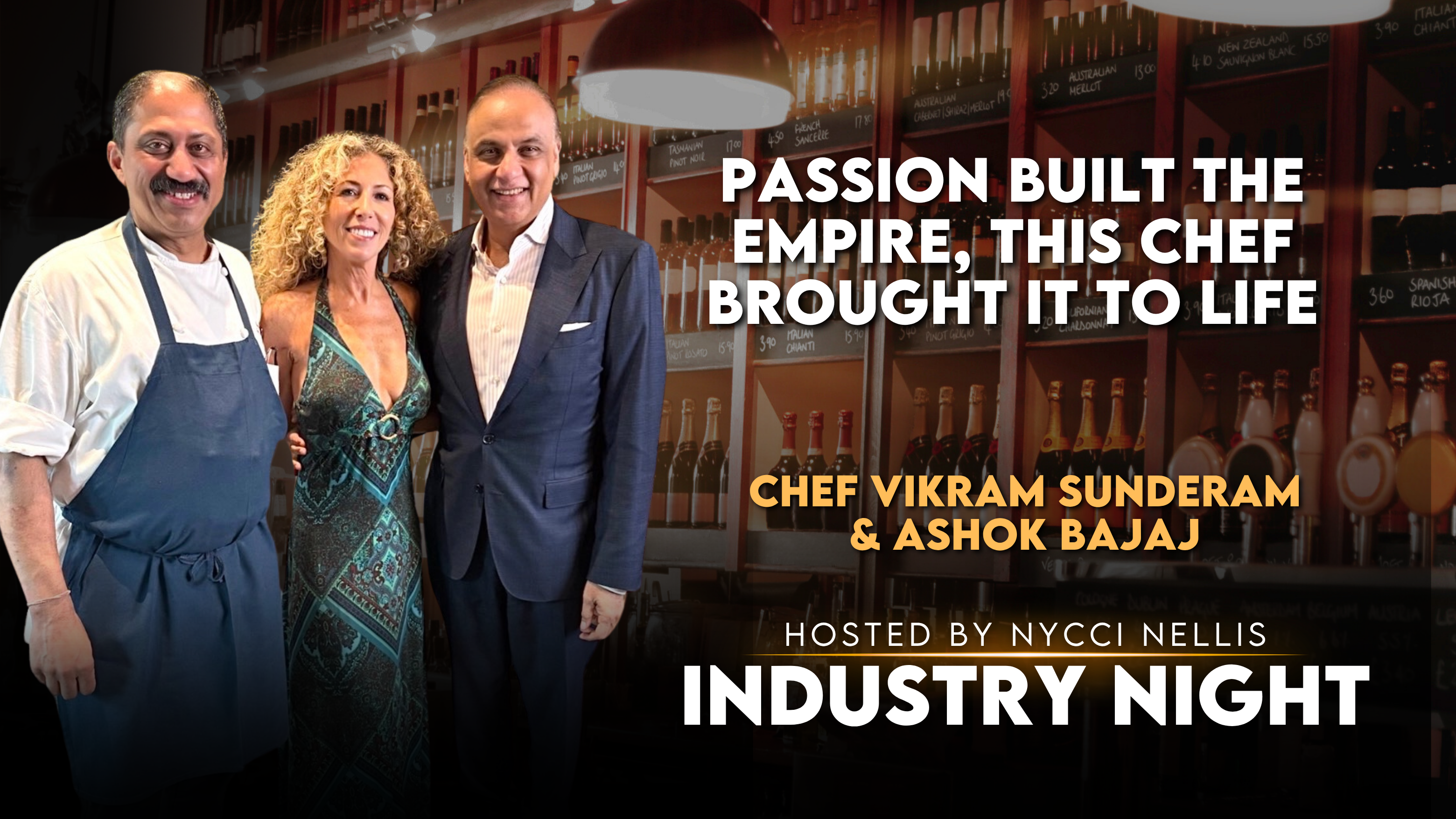
INDUSTRY NIGHT

Take a deep dive into the Industry and beyond.
Generic placeholder image
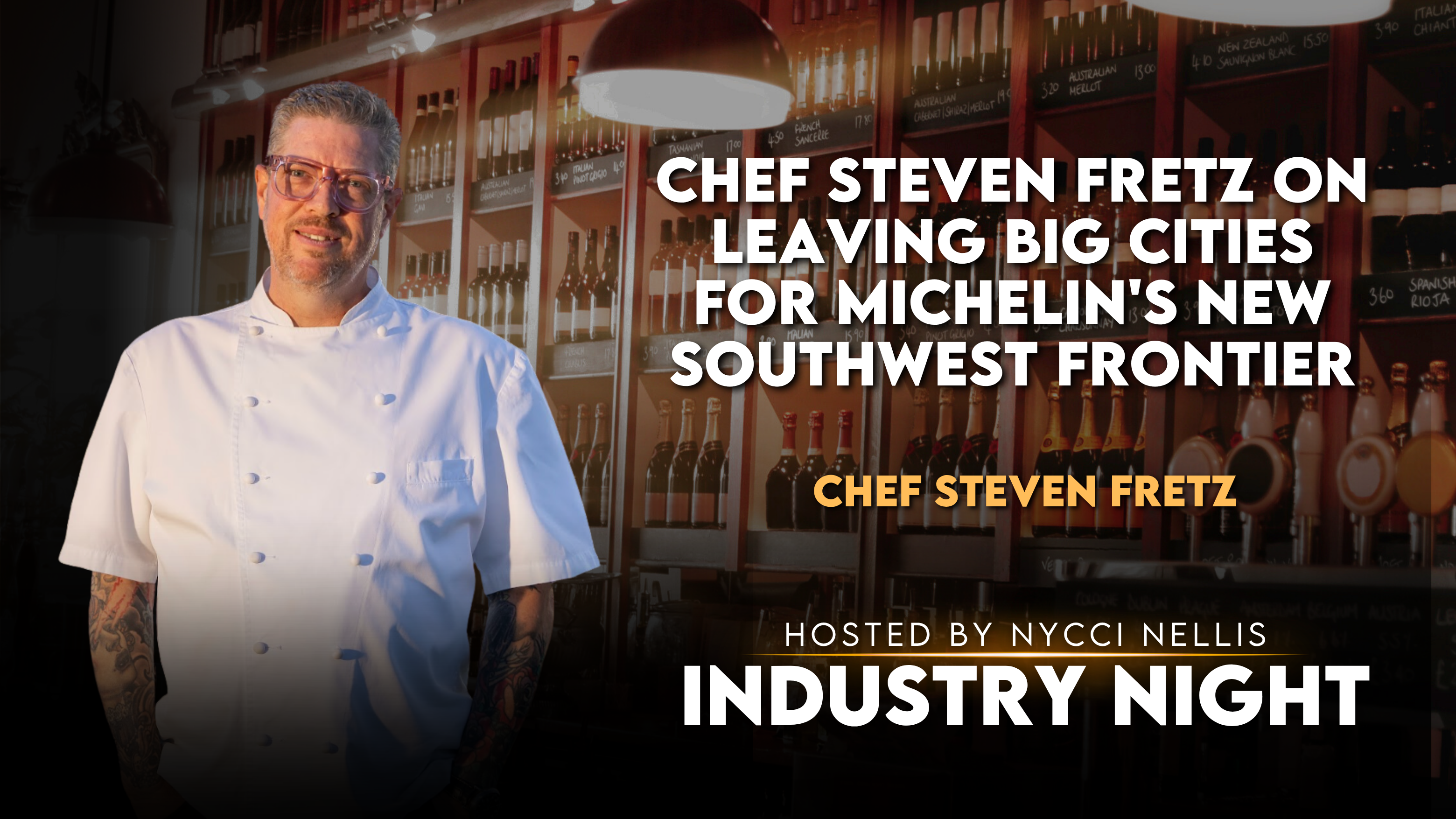
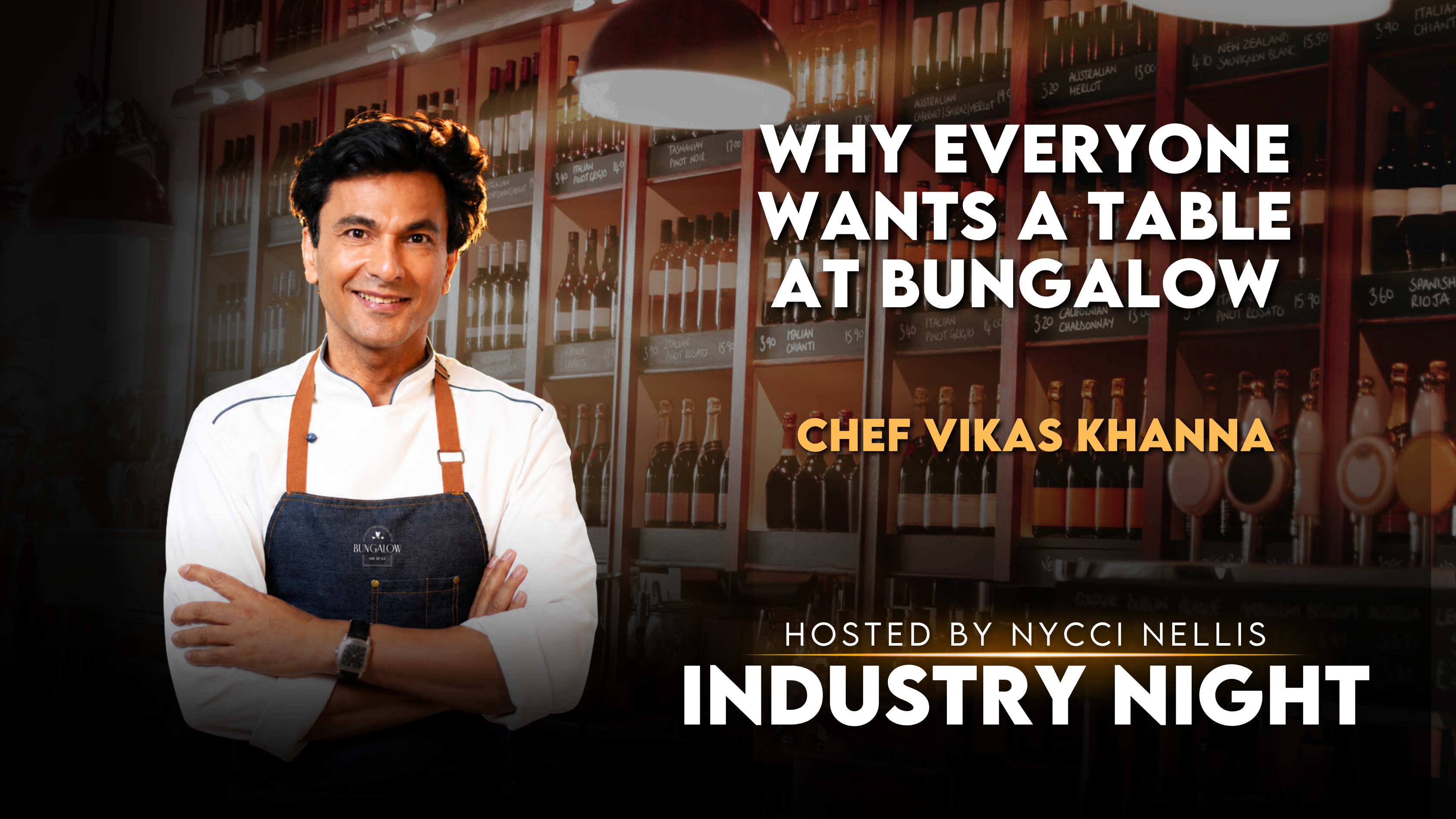
Industry Night: The Hardest Reservation in New York
Chef Vikas Khanna built Bungalow, the hottest table in New York City, after arriving in America homeless. This is the DC food podcast conversation that explains everything.Ten thousand people are on the wait list for Bungalow. Chef Vikas Khanna is not surprised. He did not open it to chase a reservation. He opened it at 54 as a promise to his late sister and his mother, to carry the full weight of Indian culture and cuisine into a dining room and set it free. If you follow the DC food and wine show, the Washington DC restaurant insider scene, or the hospitality industry podcast world, you already know guests like this do not come around every week. Chef Khanna was born with club feet in Amritsar, told he would never walk properly. He arrived in the United States with nothing. He earned a Michelin star at Junoon in 2011 and held it for eight consecutive years. He has authored more than 40 books, hosted MasterChef India for nearly two decades, directed films, spoken at the United Nations, and through Feed India, delivered more than 84 million meals to people in need. At Bungalow, he runs only 16 dishes, rotates specials nightly without repeating, and is currently running 36 weeks celebrating India, one state, one dish, one story per week. Nycci Nellis sat down with him and within five minutes understood why the New York Times used the word freedom to describe what he is doing. That word mattered more to him than any star.What You Will LearnChef Vikas Khanna opened Bungalow not to earn another Michelin star but as a personal promise to his mother and late sister, and every element of the restaurant from the Ganga Jal ceremony to the floral ceiling carries that intention.Khanna has documented more than 250,000 recipes from across India and distills that archive into a rotating menu of 16 dishes, proving that restraint and depth are not opposites in the DC dining guide conversation.The women in his life, his grandmother, his mother, his sister, a Muslim woman who sheltered him during the Mumbai riots, and designer Sheila Rizvi, shaped every instinct he brings into the kitchen and the dining room.Feed India grew from a single phone call from his mother during the pandemic and became an operation that converted 80 gas stations into food and healing stations for migrant workers and served hundreds of thousands of meals at Haji Ali Dargah during Eid.Khanna argued in Time magazine that civilizational cuisines cannot be judged through the narrow lens of Western restaurant standards, and the chef interview podcast world is still catching up to what that means for Indian food globally.Listen to the full episode here, and watch it here.
INDUSTRY NIGHT
Generic placeholder image
Industry Night: Ryan Ratino on Michelin Stars, Muscle, and Leading with Grace
Ryan Ratino holds more Michelin stars than almost any chef in America, and he spent years running a DC food empire while his body was quietly falling apart. This is the episode where the chef interview podcast goes somewhere it almost never goes.Nycci Nellis taped this one at Equinox Wisconsin Avenue at City Ridge, which tells you everything about where the conversation was headed. Ryan Ratino is the executive chef and owner of Hive Hospitality, home to one-Michelin-starred Bresca, two-Michelin-starred Jaunt, Michelin-starred Moss at the Four Seasons Fort Lauderdale, Michelin-starred Omo by Jaunt in Winter Park, and his newest Georgetown concept Oxen Olive. He leads over 200 people across multiple restaurants and holds the Michelin Guide Young Chef Award. And at 30 years old, he looked in the mirror at 206 pounds and 30 percent body fat and decided to treat his body the same way he treats his kitchens. With obsession, data, and zero shortcuts. This is the Washington DC restaurant insider conversation about what it actually costs to sustain excellence at the highest level of the hospitality industry. The discipline, the bloodwork, the cortisol spikes, the 400 biomarkers, the kilo of Japanese short-grain rice, and the Bulgarian split squats he hates. If you have ever wondered how the best in the DC dining world actually keep going, this one is for you.What You Will LearnRyan Ratino grew up in a working class union household in Ohio and knew within two months of arriving at Le Cordon Bleu in Florida at 17 that cooking was exactly right for him.He opened Bresca at 27 in the old Policy nightclub space on 14th Street intentionally before launching two-Michelin-starred Jaunt upstairs, because he wanted to earn the neighborhood's trust before asking them to celebrate there.At 30 years old and 206 pounds with 30 percent body fat, Ryan cycled through doctors until he found a specialist who ran 400 biomarkers, identified barely-functioning adrenal glands, and built a protocol that finally let him fall asleep at night.Ryan says the cleaner his body feels, the more grace he brings to leading his team. He greets every single person when he arrives and thanks every single person at the end of the night, and he credits the health journey with making that consistency possible.Listen to the full episode here, and watch it here.
INDUSTRY NIGHT
Generic placeholder image
Industry Night: Holocaust Survivor Legacy, Maryland Wine & Historic Meadmaking with Rachel Loew Lipman
A fifth-generation mead maker carries a Holocaust survivor's legacy forward, one bottle at a time.Some stories start in a vineyard. This one starts in 19th-century Poland, survives a concentration camp and a death march, and lands in a tasting room in Mount Airy, Maryland. Rachel Loew Lipman didn't just inherit a winery. She inherited a reason. And if you've ever wondered whether a bottle of wine can hold memory, grief, and joy all at once, this episode of Industry Night, the DC food and hospitality podcast, is your answer.Maryland wine gets overlooked. It shouldn't. Winemaking here dates to the 1600s, and today more than 100 wineries are producing everything from cab francs to Vidal Blancs. But what Rachel is doing at Loew Vineyards goes beyond the glass. She's a DC food and hospitality insider's dream guest: a young head winemaker running Maryland's fourth oldest existing winery, its first kosher winery and meadery, and one of the longest continuous mead-making traditions in the world. This is the DC dining guide and hospitality podcast conversation you didn't know you needed.Rachel Loew Lipman is a fifth-generation mead maker, granddaughter of Holocaust survivor William Loew, and the force behind Loew Vineyards in Frederick County, Maryland. Her family's mead-making roots trace to 1800s Poland. She holds degrees in plant science and communications from the University of Maryland, a winemaking certification from Washington State, and experience in France. In 2025, she launched Maryland's first Star K certified mead. Watch the episode here, and listen to it here.
INDUSTRY NIGHT
Generic placeholder image
Industry Night: Whiskey, Wellness, and the Future of Drinking
On this episode of Industry Night, host Nycci Nellis sits down with Ari Sussman — 2024 Whiskey Maker of the Year — for a wide-ranging conversation about the science, culture, and future of distilled spirits. From winemaking in France to founding Michigan State's artisan distilling program, Ari brings a rare blend of academic rigor and bartender instincts to one of the most fascinating conversations in the drinks world right now. The result is a show notes episode that moves from grain to glass, from tradition to experimentation, and from old assumptions to a very different future for whiskey.Ari's path into spirits is anything but conventional. He began as a policy analyst, took a one-way ticket to France, and found himself immersed in winemaking before eventually building distilleries across the United States. That winding trajectory gives him a perspective that feels both deeply technical and refreshingly practical. In this conversation, he explains how those early experiences shaped the way he thinks about flavor, process, and what makes a spirit truly memorable.Much of the episode turns on the science behind grain and flavor. Ari talks about how American whiskey has long leaned wood-forward, and why more expressive grain varietals can open the door to a more layered, nuanced drinking experience. He also discusses how Prohibition disrupted grain diversity and how distillers today are working to bring those flavors back into the conversation. It is part history lesson, part sensory deep dive, and part argument for why the category still has room to evolve.The episode also gets at one of the most interesting tensions in spirits: the transparency gap between producer and consumer. Ari argues that the usual questions wine drinkers ask do not always translate to whiskey, because the industry has historically placed a marketing curtain between the maker and the drinker. That idea runs through the whole conversation, especially as the hosts consider how younger consumers are discovering spirits today — often on their phones, through influencers, and with different expectations about access and authenticity.That broader shift raises bigger questions about the future of American whiskey. Ari makes the case that longevity in the category depends on more than just technical quality; it also depends on whether a brand connects with people and stands for something meaningful. He shares how he approaches that balance through his work with Whiskey Gypsy, including the Explorer expression and the importance of Appalachian oak in shaping the final product. The conversation makes clear that innovation in whiskey is not just about novelty — it is about building something that can last. Listen to the episode here, or watch it here. 
INDUSTRY NIGHT
Generic placeholder image
Industry Night: From 45,000 Miles On The Road To A Michelin Star - Catbird Seat's Tiffani Oritz & Andy Doubrava
Chefs Tiffani Ortiz and Andy Doubrava met at the French Culinary Institute in New York before reconnecting years later on a Malibu farm — living in a teepee, surrounded by wild parrots, discovering a shared obsession with agriculture, sustainability, and zero-waste cooking.But in this episode of Industry Night, the conversation goes far beyond the restaurant.We talk about how their nomadic culinary project Slow Burn — a traveling zero-waste pop-up that carried them through 42 states — shaped every dish now on the menu at The Catbird Seat. How two chefs with no tasting-menu experience took over one of Nashville's most iconic restaurants and earned a Michelin star doing it their way.We also dive into: life on the road vs. rooted restaurant life, fermentation and preservation as philosophy not just technique, building a kitchen culture around empathy and high standards, how to run a restaurant with your life partner without losing your mind, and why great fine dining should never feel stuffy.This is a conversation about restaurants, yes — but also about curiosity, resilience, and what happens when you build a career entirely on your own terms.Listen to the episode here, and watch it all, here.
INDUSTRY NIGHT
Generic placeholder image
Industry Night: David Nayfeld & The Answer to "Dad, What's For Dinner"
Chef David Nayfeld built his career in some of the world's most celebrated kitchens — Aqua, Cru, Eleven Madison Park, and Joël Robuchon, before returning home to San Francisco to create Back Home Hospitality, the restaurant group behind Che Fico, Bubbelah, Via Aurelia, and more.But in this episode of Industry Night, the conversation goes far beyond restaurants.We talk about how becoming a father inspired his first cookbook, Dad, What's for Dinner?, and how family life changed his relationship with cooking, leadership, ambition, and hospitality itself.David shares how growing up as the child of Russian Jewish immigrants shaped his connection to food, the influence of Jewish and Cucina Ebraica traditions in his restaurants, and the lessons he carried from some of the industry's most intense kitchens into building a more thoughtful restaurant culture today.We also dive into: cooking FOR your kids vs cooking WITH your kids, restaurant mise en place applied to family life, why not every dinner needs to be aspirational, evolving restaurant leadership, fine dining, hospitality, and identity, and the emotional side of feeding people.This is a conversation about restaurants, yes, but also about family, culture, and what it really means to nourish people.Subscribe, like, follow, and share Industry Night with the food lovers and hospitality people in your life - listen to the full episode here, or watch it here.
INDUSTRY NIGHT
Generic placeholder image
Industry Night: Cocktails, Caviar & the Perfect Martini at RPM Italian
When Ben Lieppman is in town from Chicago, you sit down, grab a cocktail and start asking questions.This week on Industry Night, I’m at RPM Italian talking all things cocktails, bar culture, and what makes one of DC’s busiest bar programs actually work. We get into the philosophy behind RPM’s bar and how they balance polished and approachableAnd yes, we talk about the RPM Dirty Martini. We also dig into what people are drinking right now from low-ABV cocktails to non-alcoholic options and why making a great mocktail requires just as much intention as anything behind the bar. Plus:How RPM curates exclusive single-barrel selectionsKeeping cocktail menus fresh while honoring the classicsWhat great hospitality actually looks like from behind the barAnd of course, I had to ask: If Ben’s ordering for me…what am I drinking? You’ll have to tune in to find out. Hear the full episode here and watch it here.  
INDUSTRY NIGHT
Generic placeholder image
Industry Night: Amy Brandwein on Leadership, Kitchen Culture & Running Restaurants Today
Welcome to Industry Night with Nycci Nellis, and we are back at City Ridge, this time in the absolutely gorgeous, amphitheater-style setting at The Botanica.I love being here. Last time I was in the neighborhood, I was over at Equinox in Wisconsin chatting with powerhouse pastry chef Susan Bae, and today, I’m sitting down with another true force in the industry: Award-winning chef and restaurateur Amy Brandwein.Amy and I go way back, like, way back. I first met her in Roberto Donna’s kitchen at Galileo, in the Laboratorio days, when http://TheListAreYouOnIt.com was just getting off the ground, and she was one of the only women in that kitchen. Fast forward, and she is now the chef and owner of Centrolina and Piccolina, a multi–James Beard nominee, and one of the most respected voices in the DC dining scene.But this conversation? We go deeper.We talk about her unconventional path — from politics to pasta — the realities of building and running a restaurant, and what leadership in the kitchen really looks like today.We did get a little dark and a little teary.Amy shares stories from earlier in her career, moments that were incredibly difficult at the time, and how those experiences ultimately shaped her into the leader she is today: stronger and deeply committed to creating a healthier, more sustainable environment for her team.We also dig into kitchen culture, labor models, mentorship, and what it means to be a woman leading in today’s restaurant industry.It’s honest, it’s real, and it’s a conversation that feels especially important right now.You think you know, but you don’t know.Listen to the full episode here and watch it here.  
INDUSTRY NIGHT
Generic placeholder image
Industry Night: Can Restaurants Put People First? Jon Murray of Noko Hospitality Thinks So
come to Industry Night with Nycci Nellis, where we go deep with the people shaping hospitality right now.This episode comes at a moment when the industry is taking a hard look at itself. From conversations around René Redzepi and Noma to Pete Wells examining the brigade system, the question is clear: what does the future of restaurant culture look like?My guest, Jon Murray of Noko Hospitality, is building a real answer.Behind Noko and Kase x Noko, Jon is redefining hospitality with a people-first model—four-day workweeks, healthcare, therapy, and real work-life balance. He calls it, People Over Profits.This is a conversation about leadership, culture, and what it takes to build restaurants that actually work for the people inside them.Also, just don’t be a …. Jerk.Listen to the full episode here and watch it here.  
INDUSTRY NIGHT
Generic placeholder image
Industry Night: Free Your Mind With Robb & Violeta of Dolcezza
In this episode of Industry Night, host Nycci Nellis sits down with Robb Duncan and Violeta Edelman, the founders of Dolcezza Gelato, one of Washington DC’s most beloved culinary brands. Recorded at the Washington Harbor favorite,Tony & Joe’s Seafood Place, the conversation explores how Dolcezza grew from a single gelato shop in Georgetown to a regional favorite known for its farm-driven flavors and commitment to sourcing from Mid-Atlantic producers.Since launching in 2004, Dolcezza has expanded to seven locations across the DMV and produces its gelato daily at the Union Market Gelato Factory & Coffee Lab. And yes, they talk about coffee and the ritual of that first teacup. No surprise with Robb & Violetta, this conversation goes deeper than dessert. Nycci talks with Robb and Violeta about creativity, sustainability, food culture, farming relationships, and their spiritual philosophy that shapes their approach to hospitality.Listen to the full episode here and watch it here.  
INDUSTRY NIGHT